Introduction
Corn snakes are among the most popular pet snakes for good reason. They are generally calm, manageable in size, active, and adaptable when their basic husbandry needs are met. However, their reputation as an “easy” reptile can sometimes lead new keepers to underestimate how important enclosure design, substrate, temperature, and handling really are.
A proper corn snake care routine starts with giving the animal enough room to move, a secure enclosure, suitable bedding, reliable temperature monitoring, and plenty of opportunities to hide and explore. Corn snakes can reach around 4–6 feet, depending on the individual, and may live for 15–20 years or more in captivity.
This corn snake care guide explains the practical details that matter most, with particular attention to enclosure size, aspen substrate, and temperament.
Understanding Corn Snake Temperament
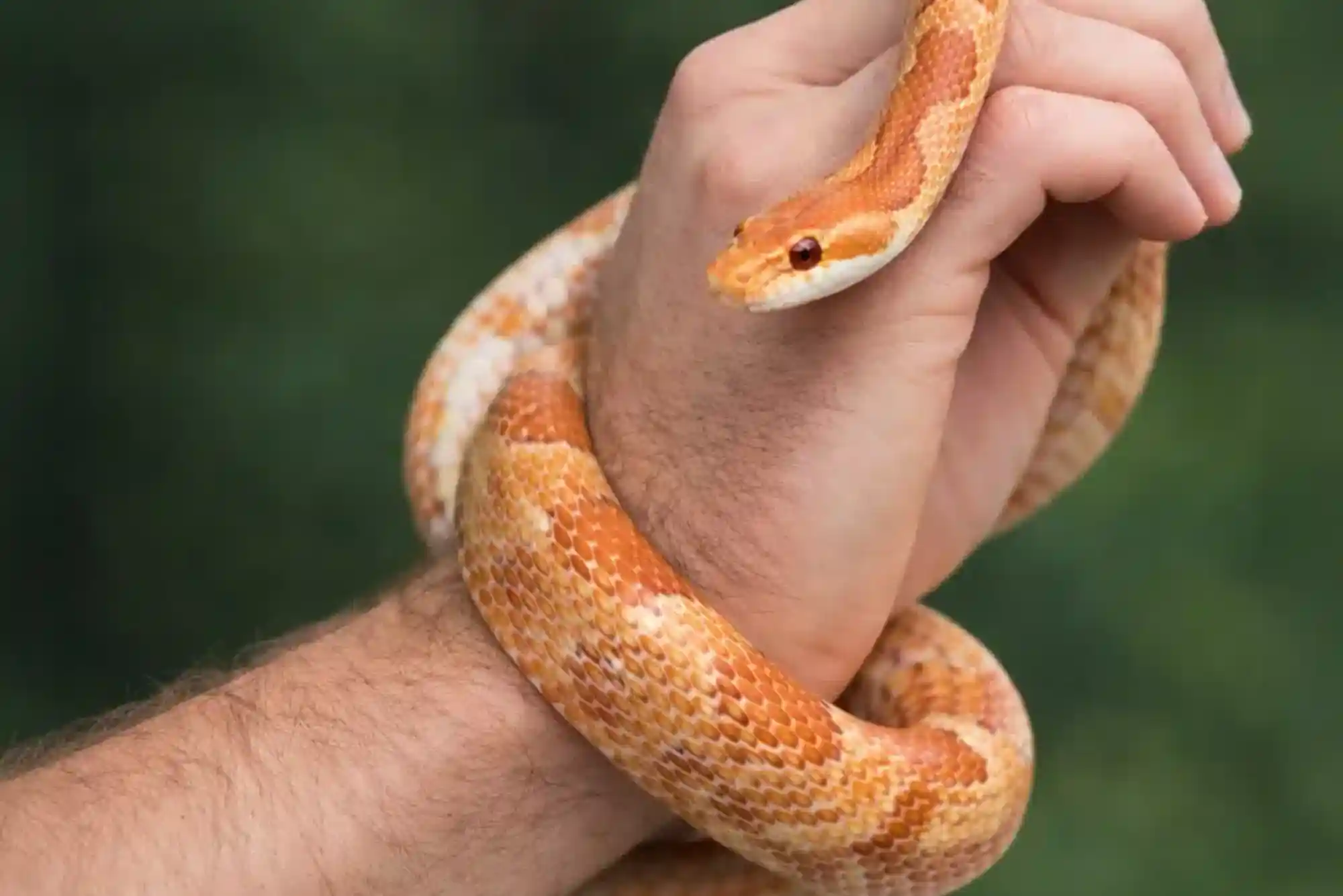
One of the biggest attractions of corn snake care is that these snakes are typically docile and tolerant of appropriate handling. They are non-venomous and generally have a reputation for being suitable for beginner keepers.
That does not mean every corn snake behaves exactly the same way. Individual personality, age, previous handling, and current circumstances can all affect behavior. A newly purchased snake may spend much of its time hiding while it becomes familiar with its surroundings.
Corn snakes are also naturally active, particularly around dawn, dusk, and nighttime. Seeing your snake exploring after the room becomes quiet is normal. A snake that spends some daytime hours hiding is not necessarily unhappy or unhealthy.

Do Corn Snakes Make Good Beginner Pets?
For many keepers, yes. Their husbandry is relatively straightforward compared with some more demanding reptiles, and they generally tolerate gentle handling well. Veterinary sources commonly describe corn snakes as hardy, beginner-friendly animals when their environmental needs are properly maintained.
The important point is that “beginner-friendly” does not mean “maintenance-free.” A corn snake still needs correct heating, fresh water, appropriate feeding, secure housing, regular cleaning, and access to an exotic-animal veterinarian.
Are Corn Snakes Aggressive?
Corn snakes are generally not aggressive. However, any snake can bite defensively if it feels threatened, is handled roughly, is stressed, or is disturbed when it should be left alone. PetMD notes that corn snakes may strike when ill, stressed, threatened, or during periods when shedding affects their vision.
A defensive hiss or rapid retreat is usually a signal to give the snake more space rather than an invitation to continue handling.
Choosing the Right Corn Snake Enclosure Size
Enclosure size is one of the most frequently debated subjects in corn snake care. Older husbandry advice often recommends relatively small tanks, while newer guidance increasingly emphasizes providing enough room for natural movement and a proper thermal gradient.
For an adult, a 40-gallon enclosure is commonly cited as a minimum by veterinary care sheets, while several modern husbandry guides recommend approximately 48 × 24 × 24 inches or larger. The Royal Veterinary College specifically recommends a minimum vivarium size of 48 × 24 × 24 inches to allow adequate stretching and exercise.
Rather than focusing only on gallons, consider the actual dimensions. A long, wide enclosure gives an adult corn snake useful floor space and makes it easier to create separate warm and cool areas.
Hatchling and Juvenile Enclosures
Young corn snakes can be housed in smaller enclosures while they grow. Veterinary guidance commonly mentions a 10-gallon enclosure for hatchlings, with larger housing as the snake develops.
A larger enclosure can also work for a young snake if it is designed thoughtfully. The key is not to leave a tiny snake exposed in a large, empty box. Add secure hides, plants, branches, and other cover so the snake can move between protected areas.
Why a Secure Lid Matters
Corn snakes are excellent escape artists. A surprisingly small gap can become an escape route, especially for a young, slender snake.
Your enclosure should have a properly fitted, secure lid or locking doors. Check the enclosure after maintenance, feeding, and cleaning to make sure every closure is properly secured. Veterinary sources specifically emphasize secure housing because of the species’ ability to escape.
Creating a Useful Enclosure Layout
Good corn snake care is not simply about buying the largest possible tank. The interior needs to make the space useful.
Provide at least one secure hide on the warm side and another on the cooler side. This allows the snake to choose shelter without having to abandon its preferred temperature zone.
Branches, cork pieces, artificial plants, and other safe decorations can provide additional enrichment. Although corn snakes spend much of their time on the ground, they are capable climbers and can make use of branches and elevated structures.
A large, stable water bowl should also be available. Fresh water should be provided regularly, and the bowl should be cleaned whenever it becomes dirty.
Aspen Substrate for Corn Snakes
Aspen is one of the most recognizable bedding choices associated with corn snake care. Proper reptile-grade aspen can provide a loose, lightweight substrate that allows a corn snake to push through the bedding and create shallow tunnels.
Veterinary sources list aspen wood shavings among suitable substrate choices for corn snakes.
The major advantage is that aspen supports natural burrowing behavior while remaining relatively easy to spot-clean. It also works particularly well in an enclosure that is maintained on the drier side.
How Deep Should Aspen Be?
A useful layer should be deep enough for the snake to move through and partially cover itself. Around 2–4 inches is commonly suggested, although the appropriate depth depends on the snake, enclosure dimensions, and how much burrowing opportunity you want to provide.
Avoid compressing the bedding into a hard layer. Loose material gives the snake more opportunities to manipulate its environment.
Should Aspen Stay Dry?
Yes. Aspen should not become persistently wet or damp.
If water spills into the bedding, remove the affected material rather than allowing a damp patch to remain. Wet bedding can encourage mold and creates an unsuitable environment for the snake’s skin.
Corn snakes do not need a constantly wet enclosure. If additional moisture is needed during shedding, a properly designed humid hide can provide localized humidity without soaking the entire substrate.
When Should Aspen Be Replaced?
Spot cleaning should happen whenever feces, urates, or noticeably soiled bedding are found. The entire substrate should be replaced periodically according to how quickly the enclosure becomes dirty. Veterinary guidance ranges from weekly replacement for heavily soiled aspen to less frequent full changes when the enclosure remains clean, so the snake’s actual conditions should determine the schedule.
The important principle is simple: do not wait for the enclosure to smell strongly or become visibly contaminated.
What Substrates Should Be Avoided?
Cedar and pine shavings should not be used for corn snakes because their aromatic oils can cause irritation and respiratory or neurological problems in reptiles. Merck Veterinary Manual also advises against these materials for snakes.
Corncob, sand, and gravel are also poor choices because they can be ingested and may contribute to gastrointestinal obstruction.
Temperature and Humidity in Corn Snake Care
Temperature is another essential part of corn snake care. A corn snake should not be kept at one identical temperature throughout the enclosure. Instead, the habitat should provide a thermal gradient.
Veterinary guidance commonly places the warm area around the mid-to-upper 80s Fahrenheit and the cool side around the mid-to-upper 70s Fahrenheit, although exact recommendations vary between care sources.
The important thing is that your snake can move between warmer and cooler areas whenever it needs to regulate its body temperature.
Use reliable thermometers to monitor both ends of the enclosure. Any heat-producing equipment should be controlled appropriately to prevent dangerous overheating.
Humidity should also be monitored rather than guessed. Corn snakes generally do well without a constantly saturated enclosure, while access to water and a suitable humid hide can support healthy shedding.
Feeding Your Corn Snake
Corn snakes primarily eat appropriately sized rodents in captivity. Frozen-thawed prey is commonly preferred because it avoids many of the injury risks associated with live prey.
The prey item should be appropriately sized for the snake rather than chosen simply according to age. Feeding frequency changes as the animal grows, with young snakes generally requiring meals more frequently than adults.
After feeding, avoid unnecessary handling while the snake is digesting. A calm environment helps reduce the chance of regurgitation and unnecessary stress.
If a snake repeatedly refuses meals, loses weight, becomes unusually lethargic, or develops other abnormal symptoms, consult a veterinarian experienced with reptiles. PetMD lists appetite loss and lethargy among reasons to seek veterinary attention.
Handling a Corn Snake Safely
Proper handling is an important part of corn snake care, particularly if you want your pet to become comfortable around people.
Approach slowly rather than reaching suddenly from above. Support the snake’s body instead of grabbing it tightly, and allow it to move through your hands naturally.
Do not deliberately handle a corn snake immediately after feeding. Handling should also be reduced when the snake is preparing to shed, because its vision can be temporarily affected and it may become more defensive.
A relaxed corn snake may move calmly through your hands, tongue-flick frequently, and explore its surroundings. A snake that repeatedly tries to flee, hisses, strikes, or remains rigid may be communicating that it wants space.
Handling should be about building trust rather than forcing interaction.
Cleaning and Everyday Corn Snake Care
Daily corn snake care is relatively simple once the enclosure is correctly established. Check the snake, water, temperature readings, and general condition of the habitat.
Remove feces and soiled substrate promptly. Wash and refill the water bowl as needed, and periodically clean hides and decorations.
During routine observation, look for clear eyes, healthy skin, a clean vent, normal tongue-flicking, and normal movement. Cloudy eyes outside the expected shedding process, persistent lethargy, skin lesions, abnormal swelling, discharge, or prolonged appetite loss deserve veterinary attention.
An annual veterinary examination can also be useful, particularly when you have access to a veterinarian experienced with reptiles and other exotic pets.
Common Corn Snake Care Mistakes
One common mistake is choosing an enclosure based only on an old gallon-size recommendation. An adult corn snake benefits from adequate length and width, and modern veterinary guidance supports providing substantially more usable space than the smallest traditional setups.
Another mistake is keeping the entire enclosure damp because the keeper assumes more humidity is always better. With aspen bedding, persistent moisture is particularly undesirable.
Using unsafe wood bedding is another preventable problem. Cedar and pine should be avoided, while suitable reptile-grade aspen can be used when kept appropriately dry.
Finally, avoid assuming that a friendly species wants constant handling. A corn snake may tolerate handling well while still benefiting from quiet periods and undisturbed rest.
Building Better Corn Snake Care
Successful corn snake care comes down to consistency rather than complicated equipment. Give your snake an appropriately spacious and escape-proof enclosure, create a usable warm-to-cool gradient, provide secure hiding places, and choose safe substrate such as suitable aspen when you can keep it appropriately dry.
Just as importantly, respect your snake’s temperament. Corn snakes are often calm and tolerant, but individual animals still have boundaries. Gentle handling, good observation, and a stable environment will help you build a better relationship with your pet.
If you’re preparing a new enclosure, use this guide as a starting point and verify your setup with a qualified reptile veterinarian.
FAQs
What size tank does a corn snake need?
A hatchling can begin in a smaller enclosure, such as a 10-gallon setup, while adults need substantially more space. Veterinary sources commonly cite at least a 40-gallon enclosure for adults, while the Royal Veterinary College recommends a minimum of 48 × 24 × 24 inches. Larger enclosures can provide more opportunities for exercise and enrichment.
Do corn snakes like to be held?
Corn snakes generally tolerate gentle handling well and can become accustomed to regular, calm interaction. However, they should not be treated like a mammal that seeks physical affection. Watch the snake’s behavior and stop when it shows signs of stress.
Are corn snakes good for beginners?
Yes. Corn snakes are widely regarded as beginner-friendly because they are generally docile, adaptable, and relatively straightforward to maintain when their environmental requirements are met.
What substrate is best for a corn snake?
Reptile-grade aspen is a popular option because it is loose and allows burrowing. Paper-based bedding and some other reptile-safe substrates can also be used. Cedar and pine should be avoided.
Do corn snakes need a heat lamp?
Corn snakes need an appropriate heat source and thermal gradient, but the exact heating method can vary with the enclosure. Heat sources should be carefully controlled and temperatures measured with reliable equipment. Veterinary guidance commonly recommends a warm zone in the mid-to-upper 80s Fahrenheit and a cooler area in the 70s.
How often should I clean a corn snake tank?
Spot clean the enclosure whenever waste or contaminated substrate is found. Full substrate replacement should depend on the substrate type, enclosure size, and how quickly it becomes dirty. Aspen should never be allowed to remain persistently wet or heavily soiled.
How big do corn snakes get?
Adult corn snakes commonly reach around 4–6 feet, although individual size varies. The Royal Veterinary College reports an eventual length of up to approximately 150 cm, or about 5 feet.