
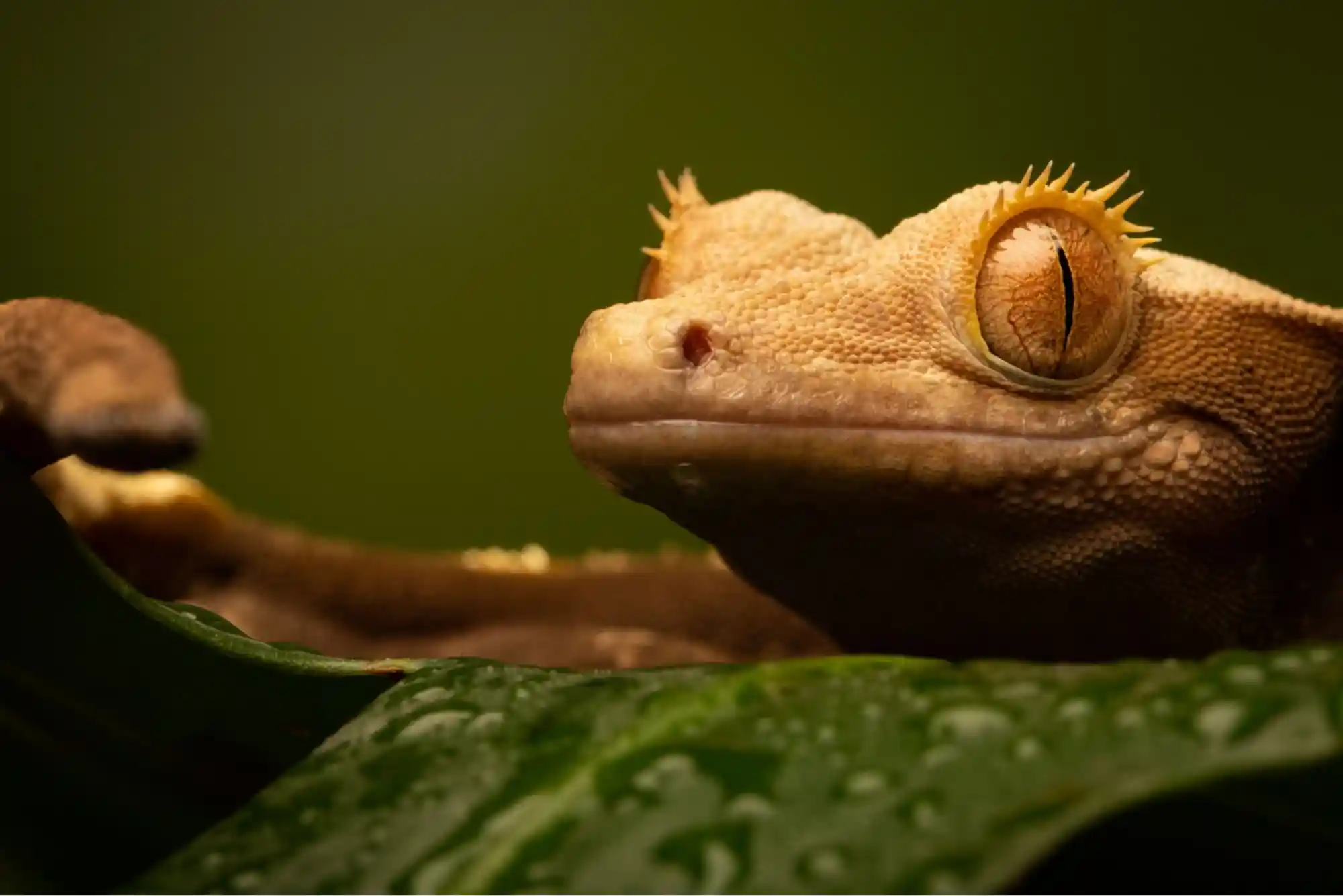
Introduction
Crested geckos are popular because they combine an unusual appearance with relatively manageable husbandry. However, easy care does not mean no care. A healthy gecko still needs the right food, temperature, humidity, enclosure design, and daily observation. Good crested gecko care is really about creating a stable environment rather than constantly changing conditions.
For most keepers, three areas cause the most confusion: choosing the right crested gecko diet (CGD), building a suitable bioactive terrarium, and figuring out how often to mist. These areas are closely connected. A well-planted enclosure can help maintain humidity, while correct misting supports hydration and shedding. Meanwhile, a nutritionally complete CGD provides a reliable foundation for feeding.
This guide explains how these pieces fit together so you can create a practical routine instead of guessing every day.
What Does Good Crested Gecko Care Involve?
Crested geckos are arboreal reptiles native to New Caledonia. They spend much of their time climbing, hiding among vegetation, and becoming active around dusk and nighttime.
That natural behavior should influence the enclosure. A tall terrarium with branches, vines, cork, foliage, and elevated resting areas is much more useful than a mostly empty enclosure.
Temperature is especially important because crested geckos can be sensitive to excessive heat. Many homes already provide suitable temperatures without additional heating. Pangea recommends an enclosure range around 70–78°F, while ReptiFiles also emphasizes avoiding excessive temperatures and monitoring the enclosure with reliable digital equipment.

Humidity should also fluctuate. After misting, humidity can rise significantly, but the enclosure should gradually dry before the next substantial misting. Keeping everything wet continuously is not the goal.
A digital thermometer and hygrometer are therefore two of the most useful tools in a keeper’s setup.
Crested Gecko Diet: Understanding CGD
The most convenient foundation for captive crested geckos is a commercially prepared, nutritionally complete crested gecko diet.
These powdered diets are mixed with water before feeding. Quality formulas are designed to provide appropriate nutrients without requiring the keeper to create a homemade fruit mixture.
This is important because feeding fruit alone does not provide a balanced diet. A gecko may enjoy banana, mango, or other fruits, but fruit should not replace a complete formulated diet.
The consistency of prepared CGD matters too. It should generally be mixed according to the manufacturer’s instructions rather than made extremely watery or excessively thick.
A feeding ledge positioned above the floor works particularly well because crested geckos are naturally arboreal. It also makes it easier to monitor how much food your gecko is actually consuming.
How Often Should You Feed CGD?
Feeding frequency depends on age, growth, body condition, and the individual animal.
Growing juveniles generally benefit from having fresh CGD available frequently, commonly every day. Healthy adults can generally be offered fresh prepared diet every two to three days.
The exact schedule should be adjusted according to the gecko’s condition. A growing animal that is maintaining healthy development has different nutritional demands from an overweight adult.
One useful habit is to monitor food consumption rather than assuming that an untouched bowl means the gecko is not eating. Crested geckos can consume surprisingly small amounts. Tongue marks in the food, regular droppings, stable weight, and appropriate body condition are more useful indicators.
Should Crested Geckos Eat Insects?
Complete CGD can provide the nutritional foundation, but appropriately sized feeder insects can add enrichment and additional animal protein.
Suitable feeders include appropriately sized crickets and feeder roaches. Juveniles may benefit from insects more frequently than adults.
Feeder insects should be properly gut-loaded and supplemented according to the insect and diet program being used. Calcium supplementation is particularly important when insects are part of the feeding routine.
The goal is not to replace CGD with insects. Instead, insects can complement an already balanced feeding program.
Choosing and Rotating Crested Gecko Food
Not every powdered product labeled for geckos is automatically equivalent. Look for a reputable complete diet specifically formulated for crested geckos.
Pangea, Repashy, and several other established reptile-food manufacturers produce complete diets. ReptiFiles also recommends rotating different flavors or formulas once a gecko is eating reliably.
This can make feeding more interesting and may prevent a keeper from becoming dependent on one flavor that the gecko eventually refuses.
However, avoid changing foods constantly when you have a newly acquired gecko. Moving to a new enclosure is already stressful. It is often sensible to begin with the diet the gecko was previously eating, then introduce alternatives gradually.
Building a Bioactive Crested Gecko Terrarium
A bioactive terrarium attempts to create a functioning miniature ecosystem rather than simply placing an animal inside a decorated cage.
For crested gecko care, a successful bioactive enclosure typically combines a moisture-retentive substrate, drainage, live plants, leaf litter, and a cleanup crew.
The drainage layer is particularly useful because excess water needs somewhere to go. A saturated substrate can create unpleasant conditions for both plants and animals.
Above the substrate, a suitable tropical soil mixture can support plant roots. Leaf litter provides additional cover and contributes organic material to the enclosure.
Springtails and suitable isopods can act as part of the cleanup crew by consuming decaying organic material and helping break down waste.
However, bioactive does not mean maintenance-free.
Choosing Plants for a Bioactive Setup
Plants should be sturdy enough to tolerate climbing and repeated contact with the gecko.
Dense foliage is useful because it creates cover and allows the gecko to move between exposed and sheltered areas. Plants also help make vertical space more functional.
Before introducing a plant, make sure it is appropriate for reptile use and has not been treated with potentially harmful pesticides.
Allowing a new bioactive enclosure to establish before introducing the gecko can also make the system more stable. This gives plants time to root and cleanup organisms time to establish.
Why Leaf Litter Matters
Leaf litter may look decorative, but it has a practical role.
It creates hiding areas at ground level, helps protect the substrate from direct disturbance, and provides organic material for cleanup organisms.
In a planted enclosure, a natural-looking forest-floor layer can also reduce the chance of the gecko directly contacting large amounts of loose soil.
The key is to use clean, reptile-safe materials rather than collecting questionable leaves from areas exposed to chemicals or pesticides.
Crested Gecko Mist Routine: Getting Humidity Right
Misting is one of the most misunderstood parts of crested gecko care.
You should not simply spray the enclosure until it is permanently wet.
Instead, think of humidity as a daily cycle. Misting raises humidity, provides drinking droplets, and temporarily moistens the enclosure. Over time, ventilation allows the enclosure to dry.
ReptiFiles recommends maintaining approximately 60–80% humidity while allowing the enclosure to fall toward roughly 50% or even somewhat lower before another misting cycle. Pangea similarly recommends allowing the enclosure to dry between periods of high humidity.
The exact misting frequency depends on ventilation, substrate, enclosure size, room humidity, and season.
A Practical Morning and Evening Routine
For many setups, an evening mist is particularly useful because crested geckos become active around dusk and night.
Mist the enclosure enough to create visible droplets on suitable surfaces. Your gecko may drink by licking these droplets from leaves, glass, branches, or decorations.
In the morning, check the hygrometer.
If humidity has already fallen appropriately, you may not need another heavy mist. If the enclosure is becoming excessively dry too quickly, the setup may need adjustment rather than simply more water.
For example, you might improve humidity retention with appropriate substrate, additional foliage, or better enclosure management.
Why the Enclosure Must Dry
Constantly wet conditions can encourage mold and bacterial growth.
A bioactive enclosure still needs airflow. The goal is a humid tropical environment with a natural wet-to-dry rhythm, not a sealed, swampy enclosure.
If condensation remains everywhere for long periods and the substrate never starts drying, examine ventilation and drainage before increasing misting.
A hygrometer is far more useful than judging humidity by eye.
How to Tell if Your Misting Routine Is Working
Your gecko’s behavior and physical condition can provide useful clues.
A hydrated, healthy animal should not consistently show signs associated with dehydration such as sunken eyes, unusually wrinkled skin, or a wavy-looking tail.
At the same time, excessive moisture can also be a problem. Persistent condensation, soggy substrate, unpleasant smells, and uncontrolled mold growth suggest that the enclosure may not be drying properly.
Do not respond to every problem by spraying more water.
Instead, check temperature, ventilation, substrate moisture, and actual hygrometer readings together.
Temperature and Lighting in Crested Gecko Care
Although humidity receives most of the attention, temperature is equally important.
Crested geckos generally do well at moderate household temperatures. Pangea recommends roughly 70–78°F, with nighttime temperatures able to fall somewhat lower.
Excessive heat is a serious concern. A terrarium that becomes too hot can quickly become dangerous, so never add a heat source simply because the enclosure is tropical.
If supplemental heat is genuinely necessary, it should be controlled with an appropriate thermostat.
Low-level UVB is also increasingly included in modern crested gecko husbandry. While complete diets can provide vitamin D3, appropriately installed UVB may offer additional benefits. It should be positioned according to the manufacturer’s specifications and should always leave shaded areas available.
Cleaning a Bioactive Crested Gecko Terrarium
Bioactive does not mean you never clean the enclosure.
Remove visible waste and spoiled food regularly. Feeding cups should be cleaned frequently, especially when wet CGD has been sitting in the enclosure.
The cleanup crew handles some organic waste, but it cannot replace normal husbandry.
Check plants, branches, drainage, substrate, and glass regularly. If something smells rotten or the substrate remains saturated, investigate the cause.
A healthy bioactive enclosure should smell earthy rather than strongly foul.
Common Crested Gecko Care Mistakes
One common mistake is feeding only fresh fruit because the gecko appears to enjoy it. Fruit alone is not a nutritionally complete captive diet.
Another is keeping humidity permanently high. Crested geckos need humidity, but they also need a drying period.
Overheating is another serious mistake. A tropical origin does not mean a crested gecko needs a hot terrarium.
Sparse decoration can also limit natural behavior. These are climbing animals, so vertical branches, vines, cork, and foliage should make up a meaningful part of the usable enclosure.
Finally, some keepers rely entirely on automatic equipment. A misting system can be useful, but it should not replace checking the hygrometer and observing the gecko.
A Simple Daily Crested Gecko Care Routine
A good routine does not need to take long.
Check the temperature and humidity first. Look at your gecko’s posture and general appearance. Check whether old food needs removing. Inspect the water supply and look for obvious waste.
In the evening, prepare fresh CGD according to the feeding schedule and mist the enclosure according to its current humidity level.
Once you learn how quickly your particular terrarium dries, the routine becomes much easier.
The important point is consistency. A stable enclosure with sensible monitoring is generally more useful than constantly changing conditions in pursuit of a perfect number.
Build a Routine, Not Just a Terrarium
Successful crested gecko care comes down to consistency. Start with a nutritionally complete CGD, provide suitable climbing and hiding opportunities, and monitor temperature and humidity rather than guessing.
A bioactive terrarium can make the enclosure more natural and help support humidity, but it still needs drainage, ventilation, appropriate plants, and routine maintenance. Likewise, misting should create a healthy humidity cycle instead of leaving the enclosure permanently soaked.
Most importantly, learn your individual gecko. Appetite, weight, activity, shedding, droppings, and appearance can tell you much more than a single number on a hygrometer.
FAQs
What do crested geckos eat?
Crested geckos can eat a nutritionally complete commercial crested gecko diet as their primary captive food. Appropriately sized feeder insects can also be offered as part of a balanced feeding program. Homemade fruit-only diets should not replace complete CGD.
How often should I feed my crested gecko?
Growing juveniles are commonly offered CGD daily, while healthy adults can generally be offered prepared food every two to three days. Insects can be offered periodically depending on age and the overall diet.
How often should I mist my crested gecko tank?
Many setups need misting once or twice daily, but there is no universal number. Ventilation, substrate, room humidity, and enclosure size all affect the schedule. Use a digital hygrometer and allow the enclosure to dry between misting cycles.
What humidity is good for a crested gecko?
A practical target is a humidity cycle that rises after misting and gradually falls before the next cycle. Around 60–80% is commonly recommended, with the enclosure allowed to dry toward approximately 50% before misting again.
Can crested geckos have a bioactive setup?
Yes. Crested geckos can thrive in properly designed bioactive terrariums. A suitable setup can include drainage, tropical substrate, leaf litter, live plants, springtails, and appropriate isopods. Bioactive still requires regular observation and maintenance.
Do crested geckos need a heat lamp?
Not necessarily. Many homes remain within an appropriate temperature range without additional heating. Supplemental heat should only be used when needed and should be controlled carefully because excessive heat can be dangerous.
Do crested geckos need UVB?
Crested geckos can be maintained without relying on UVB when their nutritional needs are properly met, but low-level UVB is commonly recommended as a beneficial component of modern husbandry. It must be installed at an appropriate distance and with suitable shaded areas.
Can crested geckos live on fruit alone?
No. Fresh fruit alone is not a reliable complete diet for a captive crested gecko. A nutritionally complete CGD should form the dietary foundation, with suitable insects used as appropriate.