
Introduction
Choosing the right exercise equipment for your small pet is essential for their daily health and happiness. A good wheel prevents boredom and obesity while keeping your furry friend active throughout the night. Two popular designs dominate the market today: traditional upright wheels like the Silent Spinner and horizontal disc options known as Flying Saucers. Each style offers unique benefits, but they also come with distinct mechanical and ergonomic differences. Understanding these differences helps you make an informed choice that prioritizes your pet’s comfort and spinal health.
Understanding Hamster Anatomy and Spinal Health
Small rodents require specific running mechanics to avoid long-term skeletal damage. When a pet runs on an upright wheel, their back arches to match the curve of the drum. If the drum diameter is too small, this constant arching forces an unnatural curvature of the spine. Over time, this repetitive strain leads to chronic pain, mobility issues, and posture deformities. Dwarf species and Syrians have vastly different sizing requirements to maintain a flat, neutral back alignment while sprinting. Selecting the correct size is always more critical than the brand name itself. Proper ergonomics ensure your pet can burn off energy safely without risking physical injury.
The Case for Upright Wheels Like Silent Spinners
Traditional upright wheels mimic the natural forward running motion that rodents instinctively prefer. High-quality models utilize dual-ball-bearing mechanisms to eliminate squeaking and grinding noises during nighttime activity. Because they stand vertically, they occupy less cage floor space than saucer alternatives. Many modern designs feature a solid running track rather than wire rungs, protecting delicate paws from getting trapped or injured. Syrians and larger breeds need a drum diameter of at least eleven to twelve inches to keep their spines completely straight. Dwarf hamsters can often manage comfortably with an eight-inch model. Maintenance is straightforward, requiring only a quick wipe down with pet-safe cleaner during cage cleanings.
Evaluating Flying Saucers for Ergonomic Benefits
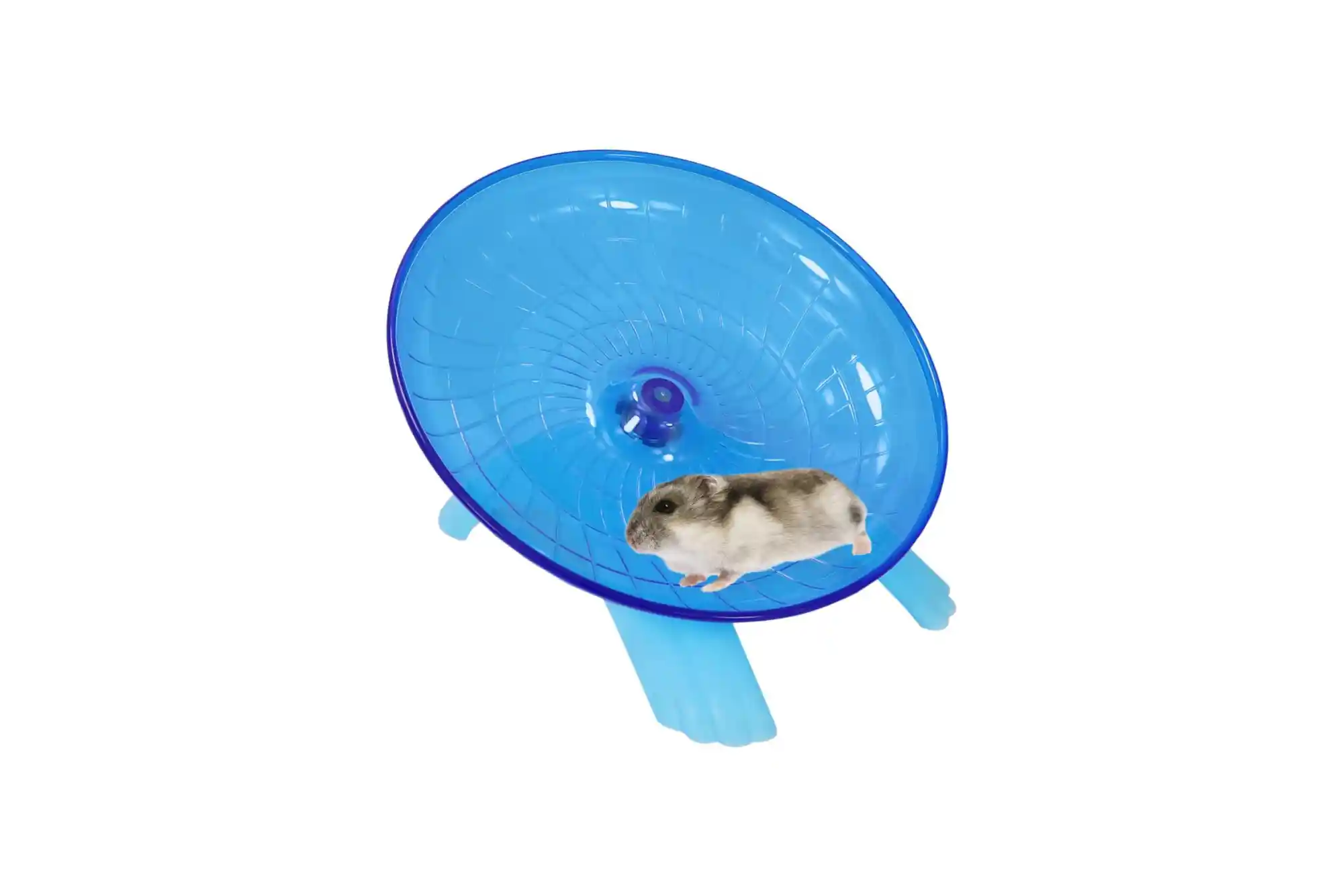
Horizontal saucer wheels offer an entirely different running experience by eliminating the curved back drum altogether. Instead of bending upward, the pet runs on a slanted disc that allows them to maintain a flat, uncurved spine. This design completely removes the risk of spinal bending associated with undersized upright drums. Saucers are particularly forgiving for energetic species that love to sprint at high speeds without restraint. However, these discs take up a massive amount of floor space inside the enclosure, making them difficult to fit in smaller setups. Some pets struggle with coordination on a spinning disc, occasionally flying off if they stop running abruptly. Placing a saucer correctly requires careful planning around bedding depth and accessory placement.
Silent Spinners Versus Flying Saucers: Direct Comparison
Comparing these two styles directly highlights how different factors impact daily pet care. Upright options save valuable floor space and encourage natural forward running postures. Saucers provide superior spinal alignment for active sprinters but demand significantly more cage real estate. Noise levels vary by manufacturer, though modern ball-bearing designs keep both styles remarkably quiet. Cleaning routines differ slightly because saucers tend to collect waste along the outer rim more quickly than vertical drums. Budget considerations also play a role, as premium silent upright models often cost slightly more than basic plastic discs. Evaluating your specific enclosure layout helps determine which style fits your daily routine best.
Choosing the Correct Size for Your Pet Species
Different breeds require drastically different equipment dimensions to stay safe and healthy. Syrian hamsters grow quite large and need massive equipment to prevent back arching entirely. Dwarf hamsters are smaller but still require ample clearance to run without awkward twisting motions. Providing an undersized wheel is one of the most common mistakes new pet owners make. Always measure your enclosure before purchasing to ensure the equipment fits alongside hides, tunnels, and water bottles. Upright drums must allow the tail to trail naturally without pressing against the axle cover. Saucers must be wide enough that the entire body stays on the running surface without dangling paws.

Common Safety Concerns and Maintenance Tips
Safety extends beyond spinal health to include paw protection and hardware durability. Wire wheels with rungs should be avoided entirely because they frequently cause bumblefoot and broken limbs. Solid plastic or wooden tracks provide a safe, comfortable surface for uninterrupted sprinting. Inspect the axle and bearing system weekly for wear, hair buildup, and dust accumulation. Lubricating mechanisms with pet-safe food-grade oils keeps nighttime operation whisper-quiet. Ensure the wheel is securely anchored so it cannot tip over and trap your pet underneath during heavy use. Regular upkeep guarantees your investment lasts for years while keeping your animal safe.
Frequently Asked Questions
Which wheel is safer for a Syrian hamster’s spine?
An appropriately sized upright wheel of at least eleven inches or a large flying saucer both protect spinal health effectively. The key factor is preventing any unnatural arching of the back while running.
Do flying saucers cause joint problems?
High-speed spinning on a tilted disc can sometimes place uneven lateral pressure on joints if the pet runs at an awkward angle. Choosing the right diameter minimizes this risk significantly.
Why is my hamster wheel making a squeaking noise?
Dust and bedding debris often work their way into the axle bearings over time. Cleaning the mechanism thoroughly and applying a drop of safe lubricant usually resolves the issue.
Can mice or gerbils use the same wheels?
Smaller rodents can use these wheels, provided the sizing matches their body dimensions to prevent toe or tail entrapment. Always verify the gap spacing around the axle cover.
How do I clean a plastic exercise wheel safely?
Wipe down the running surface using warm water and mild, unscented dish soap or a specialized small animal cage cleaner. Rinse thoroughly and dry completely before returning it to the enclosure.
Conclusion
Selecting the best running equipment comes down to balancing available cage space with proper ergonomic support. Upright wheels save floor area and encourage natural linear sprinting, provided they match your pet’s adult size. Flying saucers eliminate back curvature entirely but require a wide, open enclosure layout to operate safely. Assess your enclosure dimensions and observe your pet’s running posture to make the final choice. Invest in a high-quality, solid-surface model today to give your furry companion years of safe, quiet nighttime exercise. Upgrade your pet’s habitat now and enjoy watching them stay active and healthy.
Related Reading: Bearded Dragon Setup: UVB Lighting, Basking Temperatures & Substrate
Related Reading: دكتور نسائية وتوليد – التشخيص، العلاج، وأهم النصائح لصحة المرأة
Related Reading: Can Respins Extend Combo Win Chains?
Related Reading: บาคาร่าออนไลน์ vs บาคาร่าแบบดั้งเดิม: เลือกแบบไหนดีกว่ากัน?
Related Reading: How Do Time-Gated Missions Drive Repeated Visits? — full guide
Related Reading: Tree Service in La Grange, IL — full guide
Related Reading: Why UAE Finder Is Essential for Startups Looking for Manufacturing Companies — full guide
Related Reading: Hamster Cage Size Myths: Minimum Floor Space for Syrian & Dwarf Hamsters